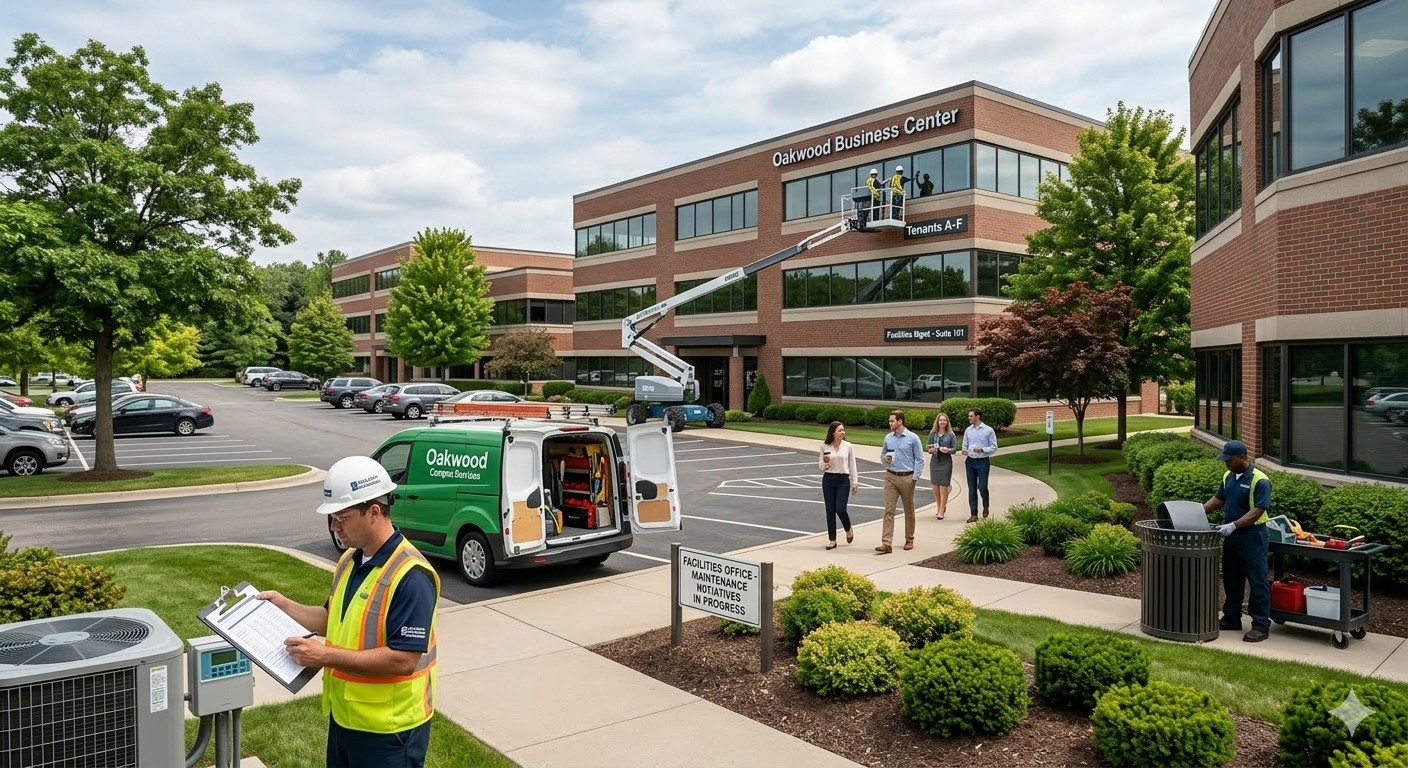
Deferred maintenance used to be a strategic choice. Owners could wait and patch things later or push improvements down the road and focus on current cash flow. That math is changing. Today, deferred maintenance doesn’t just sit quietly as a balance sheet item. It shows up everywhere, in insurance underwriting, financing terms, leasing conversations, and ultimately in value.
Commercial real estate owners are increasingly learning that fixing properties isn’t only about aesthetics, it’s about staying competitive, financeable, and insurable. Insurance carriers are often the first to react. Roof condition, electrical systems, facades, and life-safety components are being scrutinized more closely than in the past. What was once considered “serviceable” can now result in exclusions, higher deductibles, or non-renewals. In some cases, properties with visible deferred maintenance struggle to obtain coverage at all.
Lenders follow closely behind. Deferred maintenance raises red flags for financing because it represents uncertainty. Uncertainty around future capital needs, insurability, and tenant stability to name a few. Even well-located buildings can see reduced loan amounts or stricter terms due to their condition.
Tenants notice too and tenants have options. Having vacancy in a building erodes net income that cannot be recaptured later. When tenants walk through a building that needs a lot of work, they tend to keep looking. As a landlord, you don’t want to lose a prospective tenant due to issues that will need to be fixed when they move in anyway. Deferred maintenance can lead to shorter lease terms, higher concession requests, reduced willingness to invest in tenant improvements and can lower overall tenant confidence. A building that feels cared for sends a signal, not just about appearance, but about ownership quality and long-term viability.
There’s also a compounding cost effect that’s easy to underestimate. Small issues become big ones when:
- Labor availability is tight
- Material prices fluctuate
- Code requirements change between “now” and “later”
- What might have been a manageable repair becomes a capital project, often at the worst possible time.
Fixing up a property doesn’t mean over-improving it. It means prioritizing the fundamentals including the roof and building envelope, electrical and mechanical systems and life-safety compliance. Clean, functional common areas and well-maintained tenant spaces will lease or sell much faster than those that have deferred maintenance.
In the current environment, well-maintained properties aren’t just easier to own, they’re easier to insure, easier to finance, easier to lease, and easier to sell. And that’s becoming one of the most important advantages an owner can have.