Are Closed Floor Plans Making a Comeback?
Adapted from insights originally shared by the National Association of REALTORS® (NAR).
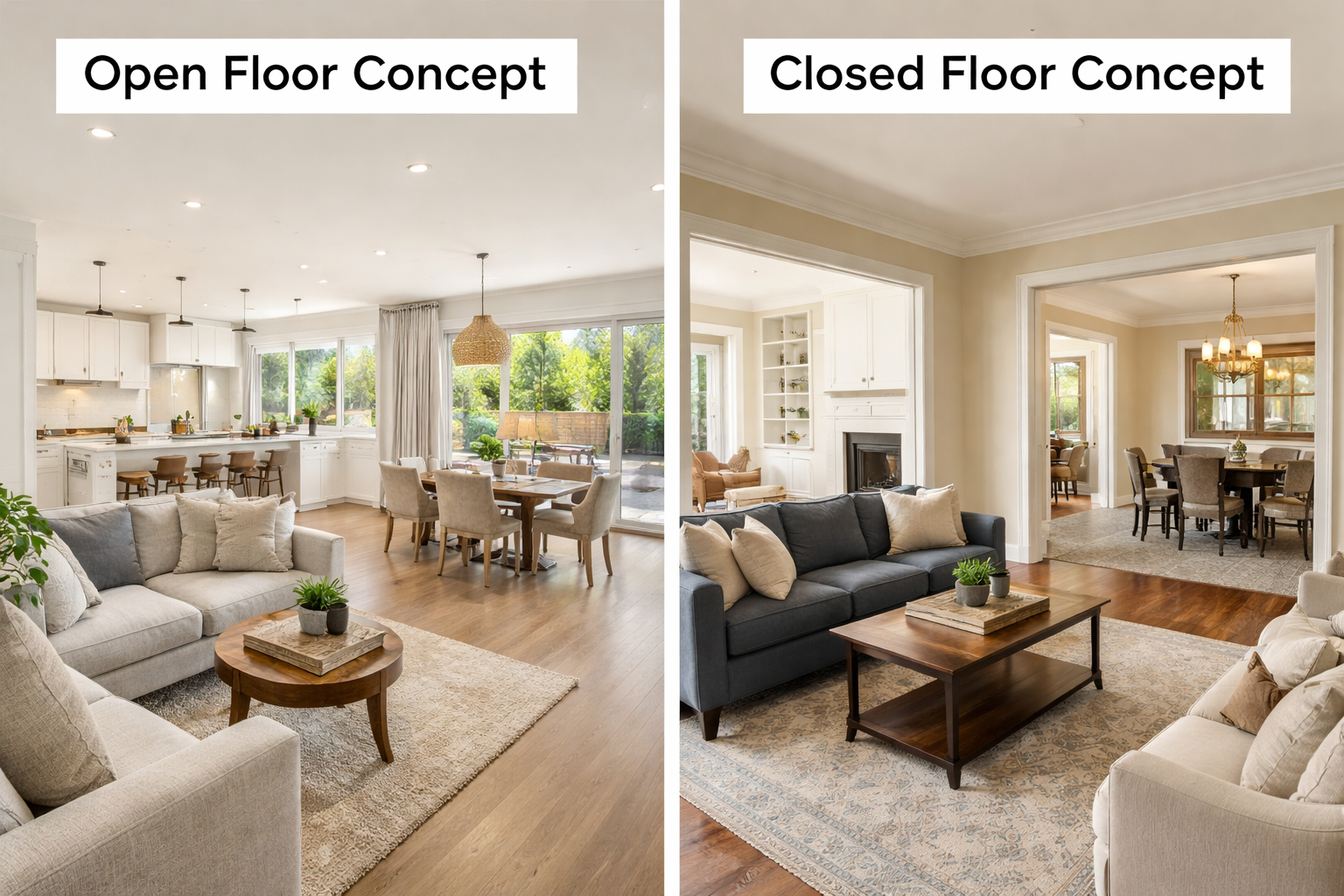
For years, open floor plans have been considered the gold standard in residential real estate. Buyers have long been drawn to bright, airy homes where the kitchen, dining room, and living room flow together to create a spacious and welcoming environment.
However, lifestyle changes in recent years—such as the rise of remote work, multigenerational households, and a growing emphasis on privacy—are prompting many buyers to rethink the fully open concept. Instead of removing every wall, some homeowners are beginning to appreciate the benefits of defined spaces that support daily routines and personal boundaries.
For real estate professionals, understanding this evolving preference can help highlight features in homes that may have once been overlooked.
The Shift in Open Concept Living
An open floor plan typically removes walls between common living areas to create a shared space that feels larger and more connected. This design gained popularity because it encourages interaction, improves natural light, and makes entertaining easier.
Builders widely embraced open layouts because they made homes feel bigger and appealed to buyers who enjoyed hosting gatherings.
But as open concepts became more common, homeowners began noticing some trade-offs. Sound carries more easily, clutter becomes more visible, and finding a quiet place to work or relax can be challenging.
A 2023 Rocket Mortgage survey highlights the growing divide in preferences:
- 51% of Americans prefer open floor plans
- 49% prefer more traditional or closed layouts
While open concepts remain popular, nearly half of buyers now value homes with clearer room separation and defined spaces. Some homeowners are even investing in renovations to add walls back into previously opened areas.
5 Reasons Buyers Are Reimagining Open Floor Plans
Although open layouts still appeal to many, there is a growing group of buyers seeking greater structure and functionality within their homes.
1. Privacy Is More Important Than Ever
With more people working remotely, having a quiet and dedicated workspace has become essential. Separate rooms make it easier to take calls, focus on work, and maintain boundaries between work and home life.
2. Clutter Is Easier to Manage
In an open layout, everything is visible—from kitchen dishes to children’s toys. Closed floor plans can make it easier to keep certain areas tidy without the pressure of maintaining a perfectly staged home at all times.
3. Homes Need to Serve Multiple Purposes
Today’s homes often serve many functions. Dining rooms can double as offices, living rooms can become workout spaces, and kitchens remain central gathering spots. Defined rooms allow homeowners to assign specific purposes to spaces without constant rearranging.
4. Energy Efficiency
Heating and cooling smaller, enclosed rooms can be more energy-efficient than managing one large open space. Buyers who are mindful of utility costs often see this as a practical advantage.
5. Noise Control
Open layouts allow sound to travel easily throughout the home. In households with children, pets, or multiple remote workers, noise can become a real concern. A 2022 study published in Frontiers in Psychology found that 55% of remote workers reported their home’s acoustic environment negatively affects work performance.
What This Means for Today’s Real Estate Market
The growing interest in more defined layouts does not mean the open floor plan is disappearing. Instead, the market may be moving toward greater balance and flexibility in home design.
Buyers are increasingly evaluating homes based on how well the layout supports their lifestyle, not just square footage or finishes.
For sellers, this shift presents an opportunity. Homes with traditional layouts—or those that allow for easy separation of spaces—may appeal to buyers seeking privacy and functionality. Simple updates such as:
- Adding sliding doors
- Creating a home office nook
- Highlighting flexible room uses
can significantly enhance a home’s appeal.
A New Balance in Home Design
While open living spaces remain popular, the renewed interest in semi-open or closed floor plans suggests builders and renovators may start offering more variety rather than a one-size-fits-all design approach.
For real estate professionals, the key is understanding what buyers truly want from their living spaces. Some will continue to prefer open, communal areas, while others are prioritizing quiet, defined rooms—or a thoughtful combination of both.
Recognizing these evolving preferences allows REALTORS® to better match clients with homes that support how they live, work, and relax today.
This article was adapted from content originally published by the National Association of REALTORS® (NAR) and is shared here to provide insights for Aspire North REALTORS® members and the communities they serve.